


Shaq Blames Pat Riley’s Body-Fat Rules for His Injuries: “My Body Couldn’t Take the Hits”
 January 25, 2026
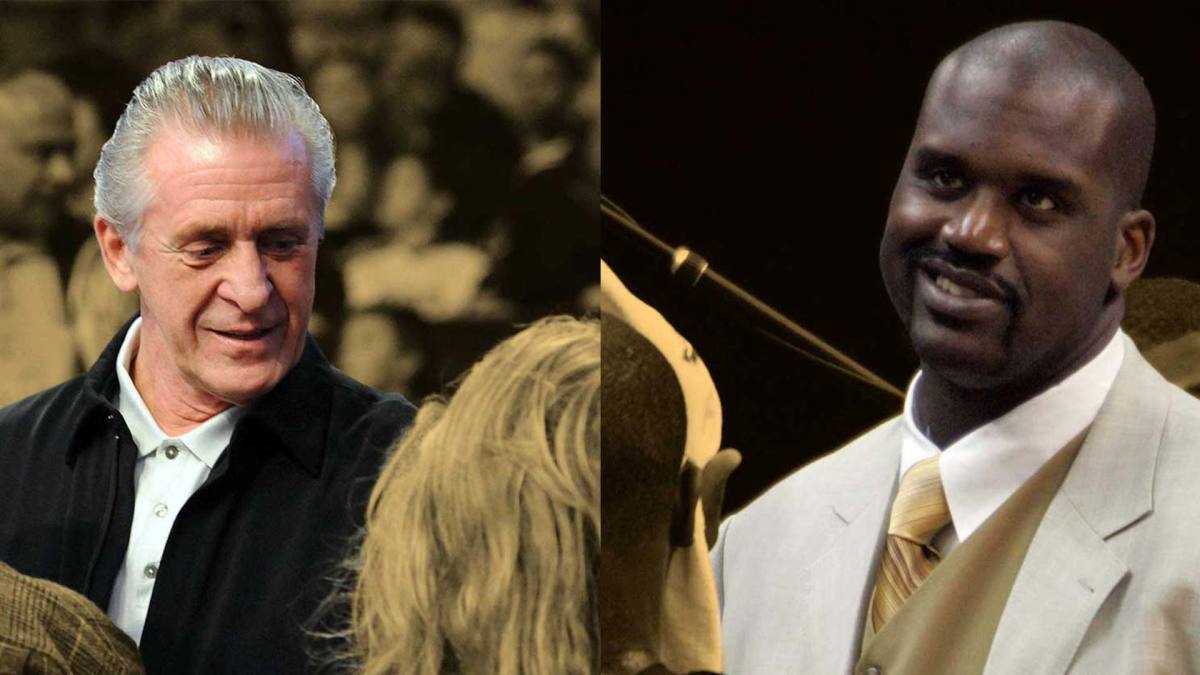
The Rise and Fall of Shaquille O’Neal’s Physical Dominance
Players like Shaquille O’Neal don’t come around often. At 7-foot-1 and 325 pounds, he moved across the floor with unbelievable speed for his size. Coupled with elite coordination and body control, it’s no wonder O’Neal became one of the greatest players of all time, who, alongside Kobe Bryant, led the Los Angeles Lakers to three consecutive championships in the early 2000s.
Despite occasional weight issues, O’Neal was at his physical peak as a Laker, and it seemed like there was no one who could stop him. However, as he admitted in his book “Shaq Uncut: My Story,” his physical decline began when he arrived with the Miami Heat, where he lost some of the power that had defined him. He placed the blame on none other than Pat Riley.
“There’s no question by trying to get my body fat down I became more injury prone. I never had any of the ticky-tacky injuries I got until I went to Miami. My massage therapist, Danny Garcia, who has been with me since I was with the Lakers, swears they made me too lean and my body couldn’t absorb hits the way it used to,” O’Neal wrote.
“I had no cushion, no buffering. Pat forgot to take into account the pounding my body took, day in and day out, going for those rebounds he wanted me to get. I was too much of a power player to take that kind of abuse on that lean of a body. I had more injuries in my time with Miami than anywhere else in my career,” he added.
A Shift in Approach and Physical Decline
Shaq was in physical decline. O’Neal arrived in Florida as one of the best basketball players in the world, after winning three NBA championships and three-time Finals MVP in L.A. However, in his final season under Phil Jackson, his scoring average dropped by as much as 6.0 points, and it was clear that decline was inevitable, even though he was still putting up elite numbers — 21.5 points and 11.5 rebounds in his last season as a Laker.
That very fact — that O’Neal didn’t obsessively take care of his body — often drove Bryant crazy, which ultimately led to the breakup of the league’s most dominant duo. The former simply didn’t care what anyone had to say as long as he was dominating.
Shaq eventually embraced the now-famous “Heat Culture” that Pat Riley was steadily building into the myth we hear about today. For all his humor and charisma, he was ultimately a professional and a winner, and he had no desire to fight against the team’s approach.
“I didn’t see how I could get down to 10 percent body fat, but I didn’t want to hear the flack I’d get for not conforming,” O’Neal recalled.
“I was in a new place with a new team and a new coach, so I did it. I spent all day doing cardio and eating stuff I never eat.”
The Impact of Riley’s Strategy
Riley was a step ahead of everyone. After a first season of adaptation, in his second year with the Heat, they went all the way and won the first Larry O’Brien trophy in franchise history, with O’Neal fully handing over the reins to the young and emerging Dwyane Wade.
For the first time in 13 seasons, O’Neal did not average a double-double by the end of the regular season, and with 20.0 points per game, he posted career-low scoring numbers. Still, the team was well-balanced, and O’Neal was no longer asked to be the leader; rather, he was asked to put himself in the service of the team for the sake of collective success.
O’Neal’s postseason production dropped even more, to 18.4 points and 9.8 rebounds in 23 games, but he didn’t care about it. He did his job, won his fourth title and helped elevate the Heat franchise.
Riley was always a step ahead of everyone else — he knew O’Neal’s age was catching up to him and that, given his weight issues, he could lose the dominance he once had, meaning the team couldn’t rely on him at all costs. As he did many times throughout his career, Riley hit a home run.
O’Neal’s dominance diminished when he lost the weight that made him an unstoppable offensive force. This weight loss likely contributed to minor muscle and joint injuries, though the team’s performance was not affected.