


How Tyleik Williams Fared in His Rookie Season
 January 25, 2026
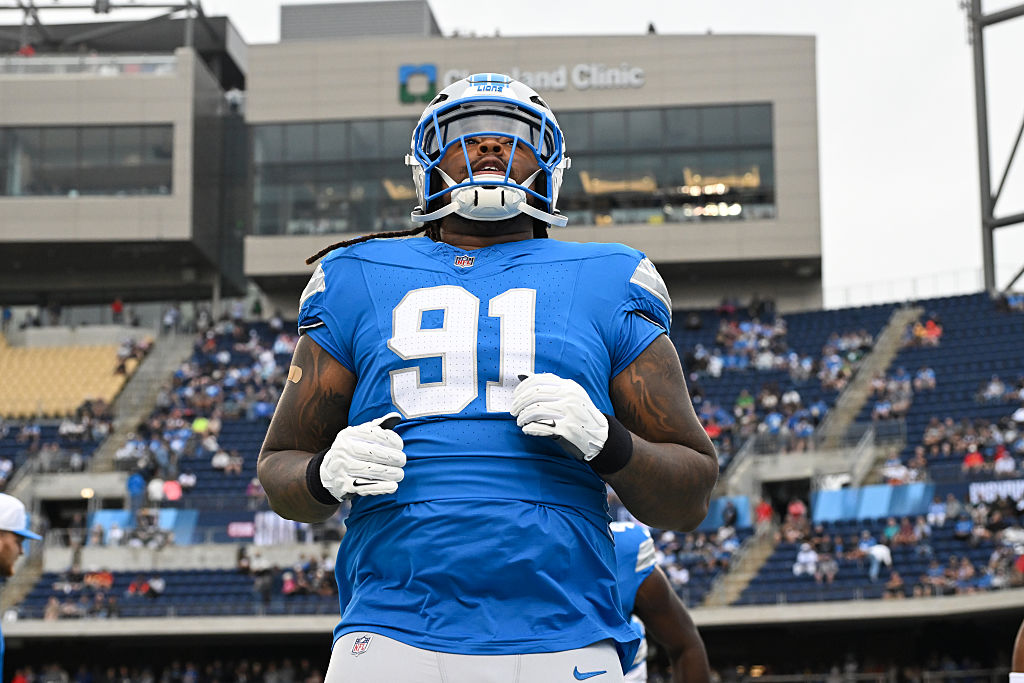
Tyleik Williams Reflects on His Rookie Season and Future Goals
After his first season in the NFL, defensive tackle Tyleik Williams proved to be more than just a strong player on the field — he’s also a self-aware and honest evaluator of his performance. Following a 17-game rookie campaign where he played every game and started 10, Williams gave himself a “C” or “C-plus” for his overall performance. This grade came after Detroit’s season ended with a 9-8 record and no playoff berth.
Williams expressed that he wanted to have a bigger impact on opposing quarterbacks. He acknowledged that while he had a good run game and won some rushes, he wasn’t achieving the results he desired.
“I think I have a good run game. I win some rushes, but I’m not winning at a rate I want to win,” Williams said. “… If I were to grade myself, I’d probably give it a C, C+. Like I said, I could have done a lot of things better, but I’m still a rookie. It’s a different playing field than college. Just gotta adjust to that and just get better this offseason.”
During his rookie season, Williams played 446 snaps, with 220 of those focused on the run and 225 on rushing the passer. This even split highlights his versatility as a defensive tackle. A first-round pick (No. 28 overall) from Ohio State, Williams was known for his strong run defense, often working alongside veteran D.J. Reader to allow linebackers like Jack Campbell — a First Team All-Pro — to make big plays.
Williams recorded 18 tackles with two for a loss, showcasing his ability to contribute in key moments. However, the Lions’ interior pressure underwhelmed throughout the season, which significantly impacted their ability to generate consistent pressure in critical games. Williams managed only one sack and 19 pressures, with a pass-rush win rate of 9.3%, ranking 45th out of 126 defensive tackles who played at least 20% of their team’s pass-rush snaps.
Despite these challenges, both the Lions’ coaching staff and Ohio State coaches recognized that the learning curve was expected. They noted that Williams has the potential to rush the passer but didn’t do so much in college due to the system he played in.
As the Lions prepare for the next season, improving their interior pass rush is a top priority. The biggest upside comes from Williams, who has drawn comparisons to teammate Alim McNeill because of his combination of size, strength, and agility.
Williams identified specific areas he wants to improve, including his “get-off, keying the ball more, and working my hand-eye coordination.” While these adjustments are crucial, he also took pride in his football intelligence, which was one of the most attractive aspects of his prospect profile. This intelligence showed up consistently during the regular season, and he finished with four pass breakups.
“I’m able to call out plays and stuff like that, give my team an advantage, I’m playing the run well, I’m closing the pocket, getting my hands up,” Williams said.
Entering the business portion of the NFL calendar, Williams is aware of what lies ahead. Some of his most beloved teammates and mentors, such as D.J. Reader and Roy Lopez, could be moving on as free agents. While Williams finished college in the NIL era, making the transition less jarring than for previous generations, he still recognizes the difference between being a rookie and a veteran.
“It’s kind of the same thing, but not a 10-year vet, you know what I’m saying?” Williams said.
While the departure of players like Reader and Lopez might lead to a larger role for Williams, he isn’t necessarily excited about the prospect of them leaving. He started alongside Reader for 10 games, and McNeill, the team’s top defensive tackle, worked his way back from an injury during the first half of the season.
Williams credited the veterans in his position group for helping him through his first season. He expressed hope that they would return, but also acknowledged the realities of the game.
“They’ve been passing on a lot of knowledge, so I hope they both come back, but I know how the game works,” Williams said. “But they’re always going to be in my back pocket if I need any advice for anything. They’re always going to be by my side, even if they don’t come back.”