Decoding the Darian Mensah Lawsuit: Why Duke Must Settle
 January 26, 2026
What Led to the Lawsuit?
Duke University has taken legal action against Darian Mensah, a former quarterback, following what appears to be a breach of their Name, Image, and Likeness (NIL) agreement. The two-year NIL Agreement was signed when Mensah transferred from Tulane to Duke. A copy of this agreement is part of the lawsuit, which is unusual because such agreements are typically kept confidential. The document reveals that Mensah was owed $4 million per year, though the exact figures have been redacted.
Mensah initially announced on December 19th that he would return to Duke for the 2026 season. However, just weeks later, on January 16th, he reversed his decision and requested to enter the transfer portal. Later that same day, he posted that he had changed his mind and would be leaving Duke. Reports suggest he intends to join the University of Miami.
Duke has filed a lawsuit, claiming that Mensah is in breach of his NIL Agreement.
What Does Mensah’s NIL Agreement Say?
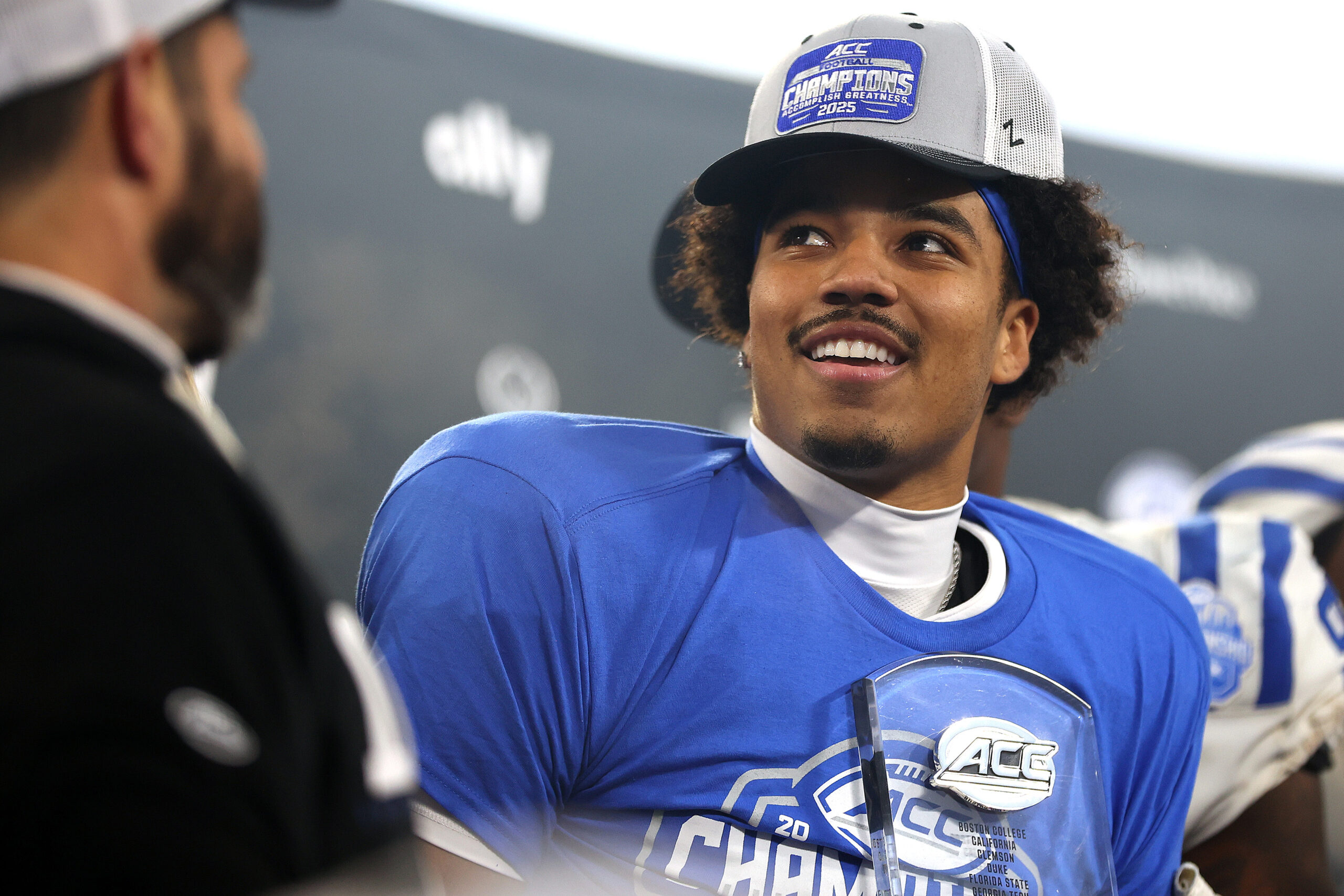
NIL rights are considered intangible property rights that students own. These agreements do not transfer ownership of a student’s NIL; instead, they act as a license. This is similar to leasing a car or an apartment, where the lessee has temporary rights to use the asset but does not own it.
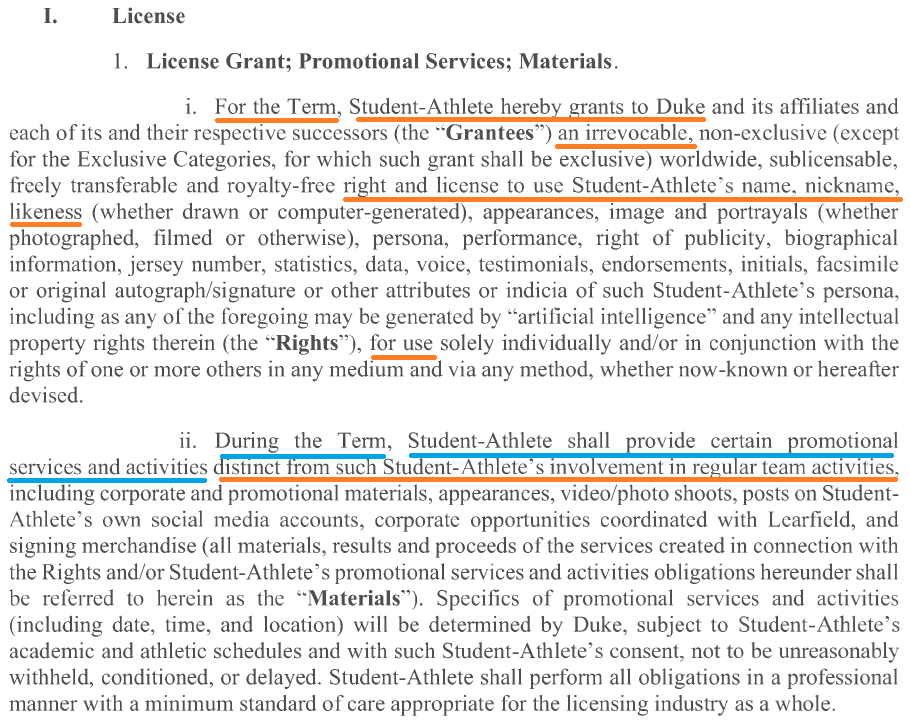
Universities often lease these rights for a set period in exchange for the athlete’s participation in promotional activities. It is important to note that this is not an employment agreement. Universities avoid labeling these arrangements as such to prevent student-athletes from being classified as employees, which would subject them to labor laws and potentially unionization.
Duke’s Decision to Bring a Lawsuit
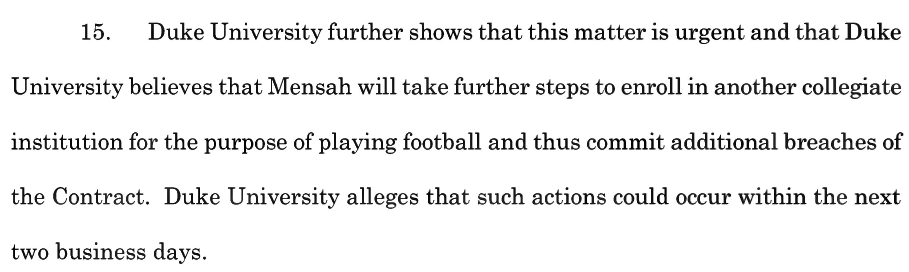
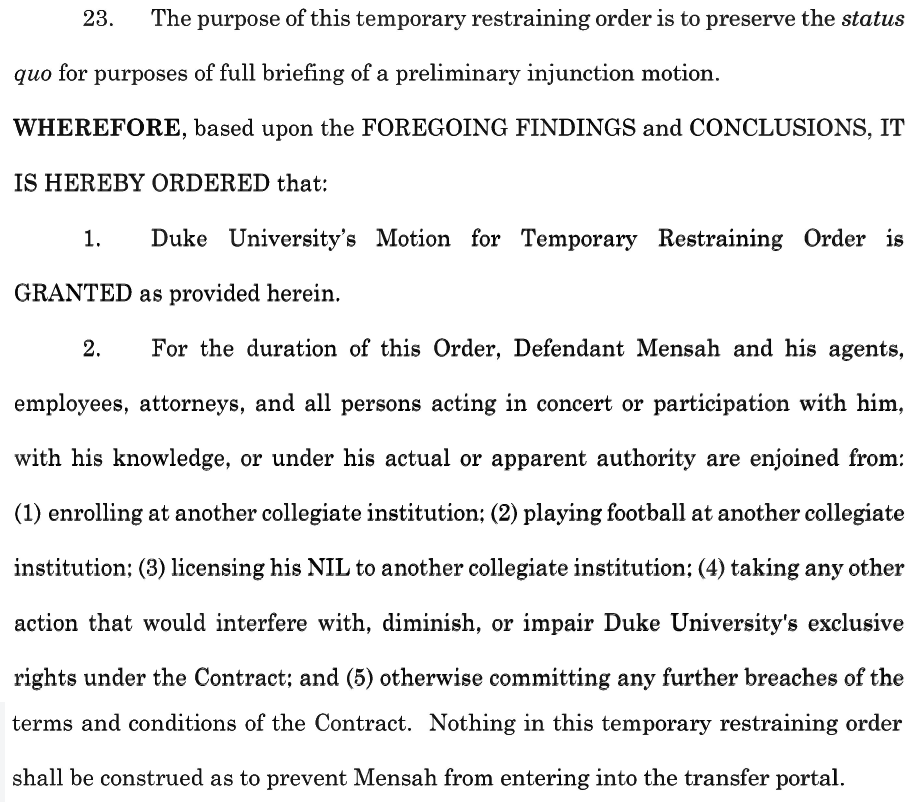
The NIL Agreement requires any disputes to be resolved through arbitration. However, Duke filed a lawsuit in North Carolina state court seeking a Temporary Restraining Order (TRO) and Preliminary Injunction (PI) to prevent Mensah from joining another university. The court granted the TRO, preventing Mensah from transferring until further notice.
The court allowed Mensah to enter the transfer portal, but this move is seen as symbolic since he cannot actually transfer without the injunction being lifted.
What Happens Next?
A preliminary injunction hearing was originally scheduled for February 2nd, but it has been moved up to January 29th. The judge who issued the TRO recused himself due to a conflict of interest, and a new judge, Ed Wilson, will preside over the case.
Mensah’s team has filed an emergency motion to reconsider parts of the TRO. They argue that the current restrictions could prevent him from enrolling in spring semester classes, effectively barring him from playing football even if the injunction is denied.
How Will Mensah’s Team Approach the Next Hearing?
If the hearing proceeds, the court will need to determine whether there is a likelihood of success on the claim, whether irreparable harm would occur, and whether the public interest supports the injunction. Mensah’s team is expected to focus heavily on the “irreparable harm” argument, citing examples like loss of reputation or unique personal value.
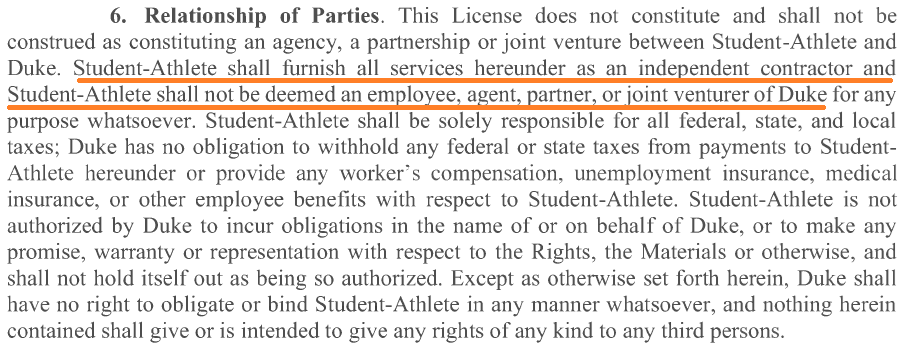
Mensah’s contract includes an acknowledgment of irreparable harm, but under North Carolina law, such clauses alone may not be sufficient to support an injunction.
Duke and Mensah Should Settle Before the Hearing
Both parties face pressure to settle before the hearing. If Duke loses, it could weaken future enforcement of NIL agreements. If Duke wins, it might push courts to view athletes more like employees, which could have broader implications for the NCAA.
A settlement would allow Duke to maintain its position without setting a precedent that could affect other universities. It would also provide clarity for future NIL agreements and the rights of student-athletes.
Got Questions?
If you have questions about the implications of this case on the NIL industry or the legal landscape surrounding student-athletes, feel free to share your thoughts in the comments section.
Understanding the Legal Framework
The legal framework surrounding NIL agreements is complex. While these agreements are designed to protect both the university and the student-athlete, they also raise questions about the balance of power between institutions and individuals. As the case between Duke and Mensah unfolds, it will serve as a critical test case for how courts interpret the enforceability of NIL contracts.
Implications for the Future
This case could set a significant precedent for how universities approach NIL agreements. If courts side with Duke, it could lead to stricter enforcement of these contracts. However, if the court rules in favor of Mensah, it may signal a shift toward greater autonomy for student-athletes.
The Broader Impact
The outcome of this case will have far-reaching effects on the entire NIL industry. It could influence how universities draft their agreements, how student-athletes negotiate their terms, and how courts view the relationship between athletes and their institutions.