


Chess Club Contemplates Selling Historic Trophy Tied to Far-Right Fascism
 January 26, 2026
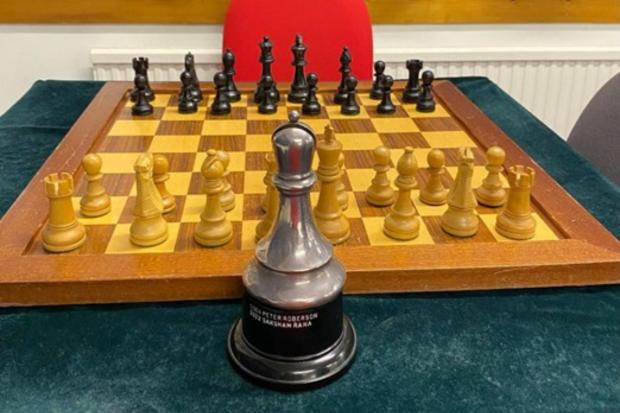
A Historical Trophy with a Complex Past
During the years of the pandemic, a trophy remained hidden at the back of the Trophies cabinet at the Bridge and Chess Club. This particular item, known as the Silver Bishop, was eventually brought out and repurposed as the permanent trophy for the winners of the Basingstoke Junior Chess Championship.
After the trophy was presented to one of the first winners, the boy’s father noticed some faded writing on the award. The inscription revealed that the trophy had been given to the Basingstoke Chess Club in 1935 by Henry Drummond Wolff, an MP. At the time, Drummond Wolff had just won the safe Basingstoke Conservative seat in a by-election, securing a majority of 6,885 votes.
The Man Behind the Trophy
Henry Dummond Wolff, the former MP for Basingstoke, was not only a political figure but also an avid chess player. During his time, the Chess Club was based at the Conservative Club, and it is believed that Drummond Wolff was a passionate participant in the game.
Drummond Wolff came from a wealthy family. His grandfather, Sir Henry Drummond Wolff, was a renowned British diplomat who played a key role in resolving conflicts in the Middle East and Turkey. This legacy of wealth and influence shaped the younger Drummond Wolff’s life, leading him to socialize with the upper classes in the United States.
In 1933, he married Margaret Fahnestock, the daughter of Gibson Fahnestock, a prominent investment banker. Margaret herself had a distinguished social background, having been a debutante alongside notable figures such as Barbara Stanwick and Barbara Bush. The couple had a daughter named Georgiana, born in London in 1934.
A Controversial Political Alignment
However, the political climate in the United Kingdom during this period was turbulent. The rise of far-right groups like the British Union of Fascists (BUF), led by Oswald Mosley, began to gain traction. Many members of the upper class, including those in Hampshire, supported these movements.
Drummond Wolff was not only a chess enthusiast but also a strong supporter of the BUF. He harbored a desire for a government modeled after Nazi Germany and strongly opposed socialism. Although he resigned from his position as an MP after just one year, he continued to support Mosley by helping select his successor, Patrick Donner, another fascist.
Connections with Nazi Germany
Drummond Wolff maintained a keen interest in business connections, particularly with Nazi Germany. He arranged meetings with high-ranking Nazis, including advisors to Hitler and Göring. These interactions raised questions about his political allegiances.
At the outbreak of World War II, both Drummond Wolff and Donner modified their views. Donner even joined the Royal Air Force. After the war, Henry Drummond Wolff traveled the world with his wife, visiting the United States, Switzerland, and Morocco. He passed away in 1982 at the age of 82, followed by his wife Margaret four years later.
The Dilemma of the Silver Bishop
Now, nearly 90 years later, the Silver Bishop trophy has returned to the spotlight, presenting a dilemma for the Chess Club. Should they sell it to Alan Stone to raise funds for the upcoming Chess Congress at BCOT, considering its links to fascism? Or should they preserve it and continue to present it to future junior chess champions in Basingstoke?
This historical artifact serves as a reminder of the complex intersections between sports, politics, and personal history. As the Chess Club deliberates, the story of the Silver Bishop continues to unfold, reflecting the broader narrative of a bygone era.