


Miami AD Dan Radakovich Pushes for Caps on Athlete Pay
 January 18, 2026
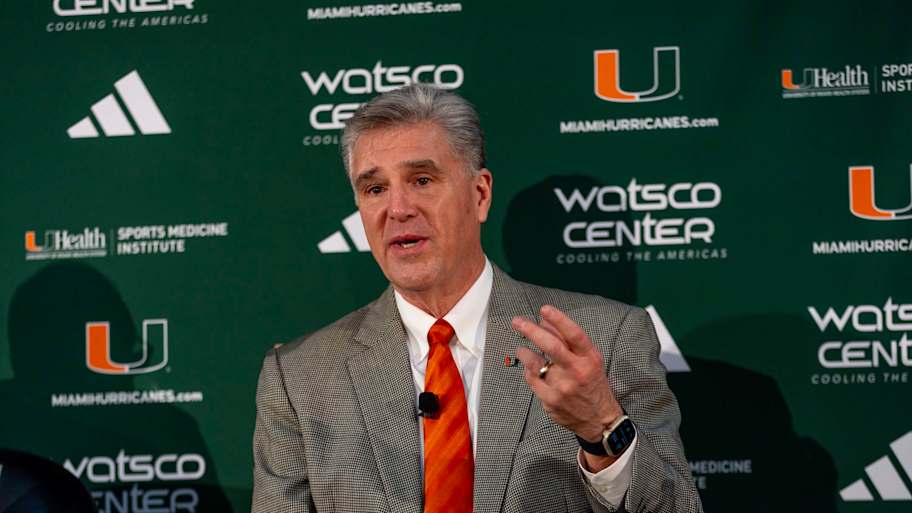
The Debate Over Athlete Compensation in College Sports
Miami athletic director Dan Radakovich recently made headlines with his strong stance against capping athlete compensation. Speaking with Yahoo Senior College Football Reporter Ross Dellenger, Radakovich emphasized that the idea of limiting earnings for college athletes has never been effective. His comments came as Miami was preparing to add Duke transfer quarterback Darian Mensah to its roster.
The conversation around athlete compensation has become increasingly complex, especially with the rise of name, image, and likeness (NIL) deals. Allegations of tampering have become common in collegiate sports, with high-profile cases like Texas quarterback Arch Manning, who reportedly has a NIL valuation of $5.3 million. Dellenger also mentioned the lawsuit filed by Wisconsin against Miami cornerback Xavier Lucas, who previously played for the Badgers.
Carson Beck, a quarterback at Miami, currently holds the highest valuation among Miami athletes at $3.1 million. These figures highlight the growing financial stakes in college athletics and the challenges faced by schools in managing these expenses.
Radakovich pointed out that enforcing the $20.5 million cap on all athlete compensation at each school is extremely difficult. He noted that many college officials believe this cap is not only hard to enforce but also ineffective in maintaining competitive equity. Schools are exploring ways to exceed the cap, and Radakovich believes that restricting earnings, even within the House’s settlement, is not a viable long-term solution.
The Case for an Open System
Radakovich argued that the current model of capping compensation is not working. He stated:
“The idea of capping compensation has never worked in this industry…The model we have right now is really difficult to enforce. People who feel like they want to invest should have the ability to invest…Over time, if we have this kind of open system, economics will bring things back to a more normal circumstance…This model would allow this to be fair to those who want to invest and allow the market to settle. It will settle over time. It always has.”
He estimated that uncapped football rosters could reach $35-$40 million, with projections of $50 million in a few years. This suggests a shift toward a more open and market-driven approach to athlete compensation.
Challenges and Concerns
Despite the push for an open system, there are concerns about the potential for wealthier programs to outspend others. When asked if an uncapped market would lead to such disparities, Radakovich responded:
“Aren’t they now?…We’ve never been successful to a large extent at legislating competitive equity.”
Texas Tech serves as a prime example, with the Red Raiders spending $70 million on NIL deals in 2025 alone. This highlights the growing influence of third-party deals, which are often exempt from the current cap. Ohio State athletic director Ross Bjork referred to this as a “soft cap,” emphasizing that the House settlement cannot keep up with the rapidly evolving market.
Bjork also expressed the view that college sports cannot continue to “govern the money.” He suggested that the market should be allowed to evolve naturally, with the understanding that economic forces will eventually balance things out.
The Future of College Athletics
Dellenger concluded his article by quoting Radakovich, who summarized the current landscape:
“Everyone is looking to get an edge on everyone else as this industry has done forever…They are going to spend X, so we are going to spend 2X.”
This statement reflects the ongoing arms race in college athletics, where institutions are constantly striving to outdo each other in terms of resources and investment. As the debate over athlete compensation continues, it remains to be seen how the industry will adapt to these changing dynamics.