


Not Rocket Science: Why K-State Struggled with 3-Pointers vs. BYU
 January 3, 2026
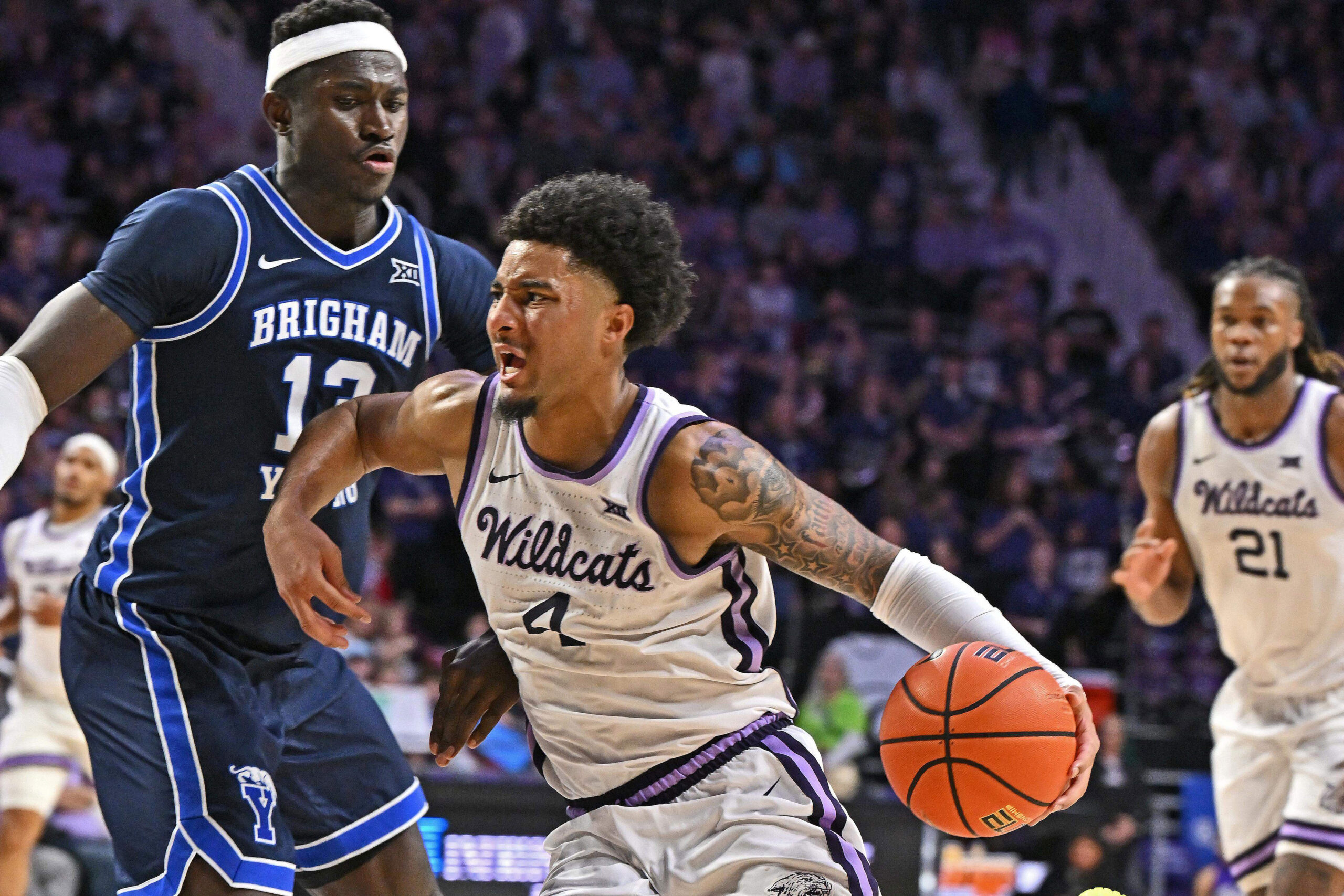
BYU’s Defensive Strategy Leads to Key Victory
When BYU basketball coach Kevin Young was asked how his team managed to contain Kansas State’s offense during an 83-73 win at Bramlage Coliseum, he smiled and gave a straightforward answer.
“This isn’t rocket science,” he said.
In Young’s view, the No. 10 Cougars (13-1) focused on two main objectives when the Wildcats (9-5) had the ball on the first day of Big 12 action.
First, they aimed to stop K-State’s leading scorer, PJ Haggerty. Second, they worked to prevent K-State shooters from getting open looks from beyond the arc.
While BYU didn’t succeed in containing Haggerty—his 24 points, seven rebounds, and six assists were a testament to his skill—the Cougars excelled in limiting the Wildcats’ perimeter shooting. K-State, known for being one of the best 3-point shooting teams in the country, shot a season-low 3-of-21 from beyond the arc against BYU.
“Our guys did a good job of mixing up our coverages and not helping too much,” Young said. “(Haggerty) did good. He’s a great player, and he did a good job of drawing fouls. But to only let one guy hit a 3, that is what impressed me. We had really good attention to detail.”
Abdi Bashir was the only K-State player to hit a 3-pointer against BYU, making 3-of-8 from the perimeter. The rest of his teammates combined to go 0-for-13, with David Castillo missing all five of his attempts and Nate Johnson missing all three of his attempts.
K-State has built its identity around 3-point shooting this season. They have made as many as 19 shots from beyond the arc in a game. Even after their struggles against BYU, they are still shooting 38.5% from deep, which ranks 22nd nationally.
When they make a lot of 3-pointers, they tend to win. When they struggle, they tend to lose.
This game followed that pattern.
“We just missed shots,” Haggerty said. “It happens in games. I didn’t think we played our best.”
K-State coach Jerome Tang was more concerned than his star player about the performance.
Sure, it was a bad shooting day for the Wildcats. But it wasn’t entirely their fault. Tang credited BYU for forcing the poor shooting performance. The way BYU played on defense left K-State players hesitant to shoot even when they had open looks.
“I thought we turned down some,” Tang said. “There were probably four or five that we should have been ready to shoot that we weren’t ready to shoot. Some of that is a credit to their length and their closeouts. But some of it is – I don’t know why we didn’t take certain shots that we would have normally taken.”
At one point, Tang grew so frustrated with his team’s shot selection that he told his players, “we can’t make 3s if we don’t shoot them.”
Tang went on to say that K-State attempting 21 shots from beyond the arc and 46 from within the arc was not a good ratio for this roster.
The Wildcats will need to find new ways to get open on the perimeter as Big 12 play continues.