


Salman Agha’s Strategy for Pakistan’s T20 World Cup: Balancing Chaos and Consistency
 January 26, 2026
Pakistan’s T20 World Cup 2026 Squad and Strategic Approach
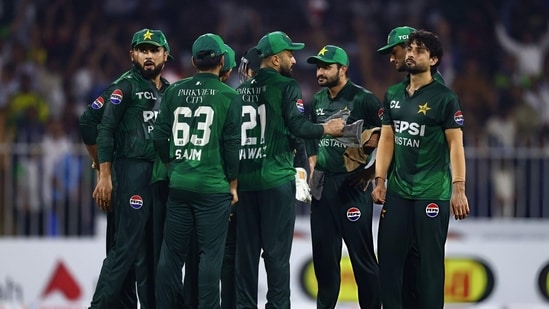
Pakistan has unveiled their 15-man squad for the T20 World Cup 2026, with Salman Ali Agha at the helm as captain. The team includes key players like Babar Azam, who remains a central figure in the batting lineup, and Shaheen Shah Afridi and Naseem Shah, who headline the pace attack. All four group matches will be held in Colombo, but there is a political undercurrent as the Pakistan Cricket Board (PCB) has stated that the government will make the final decision on participation.
From a cricketing perspective, the selection reflects a strategic tilt towards flexibility. The squad features three wicketkeeper-bat options, two specialist spinners, and enough all-rounders to adapt to different match situations. In Group A, which includes India, Netherlands, USA, and Namibia, Pakistan’s strategy is clear: start strong with pace, apply pressure in the middle overs with spin, and maintain aggressive batting options to chase or set targets.
Pakistan Squad for T20 World Cup 2026
- Salman Ali Agha (captain)
- Abrar Ahmed
- Babar Azam
- Faheem Ashraf
- Fakhar Zaman
- Khawaja Mohammad Nafay
- Mohammad Nawaz
- Mohammad Salman Mirza
- Naseem Shah
- Sahibzada Farhan
- Saim Ayub
- Shaheen Shah Afridi
- Shadab Khan
- Usman Khan
- Usman Tariq
Strengths of Pakistan for T20 World Cup 2026
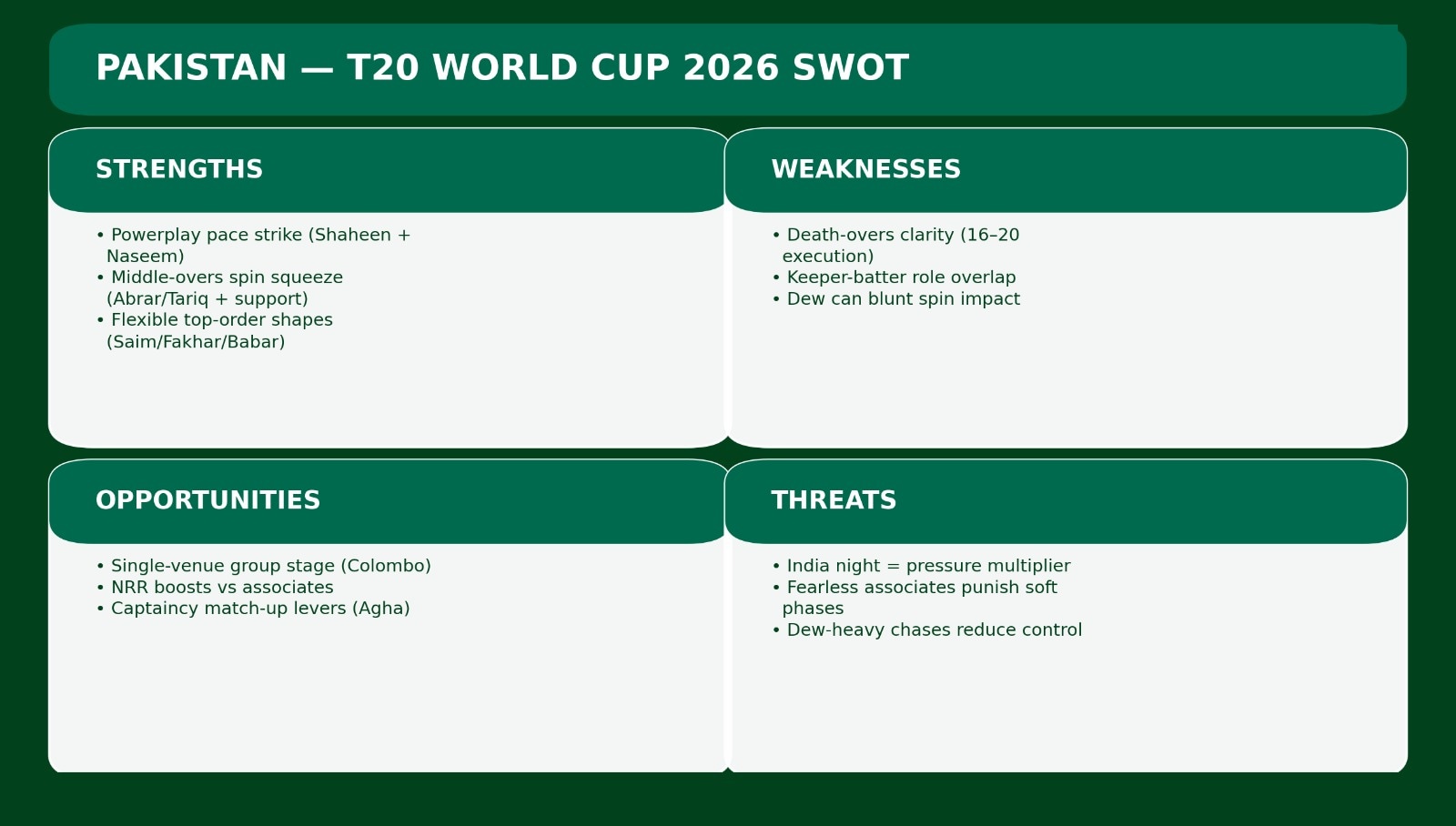
Powerplay Wicket-Taking: Shaheen and Naseem Raise the Ceiling
Shaheen Shah Afridi and Naseem Shah are known for their ability to change the momentum of a game in the first six overs. Their skills in swing and hitting hard lengths make them valuable assets, especially in Colombo where the pitch can offer some assistance for the new ball. Pakistan’s strategy is to take wickets early rather than just managing runs.
Middle-Overs Squeeze: Abrar, Tariq, Plus Shadab–Nawaz as the Support Net
Abrar Ahmed and Usman Tariq provide two specialist spin threats for the middle overs, supported by Shadab Khan and Mohammad Nawaz as the “control” options. This mix of four bowlers allows Pakistan to create a choke situation, starting with dot-ball pressure and aiming for wickets as a release valve.
Batting Flexibility: Saim–Fakhar for Disruption, Babar for Structure
Saim Ayub and Fakhar Zaman are built to disrupt powerplays, while Babar Azam provides structure when early aggression doesn’t pay off. Adding Salman Agha and Shadab Khan as movable pieces gives Pakistan the flexibility to tailor their batting approach to the conditions rather than forcing a single template.
Weaknesses of Pakistan for T20 World Cup 2026
Death-Overs Clarity: The 16–20 Plan Must Be Earned
Without Haris Rauf, Pakistan’s death bowling becomes more role-dependent. Shaheen and Naseem will need to nail their plans under pressure, and the third seamer’s overs cannot drift, especially against teams that target the last five overs as a license to swing.
Role Overlap: Three Wicketkeepers, One Keeping Job
Usman Khan, Sahibzada Farhan, and Khawaja Mohammad Nafay provide options, but overlap can turn into uncertainty. Pakistan will need to pick one primary keeper and define the others’ batting purpose—powerplay punch, middle-overs tempo, or finishing—rather than treating them as interchangeable cover.
Dew in Colombo: Spin Can Be Blunted
If the ball gets wet, the middle-overs squeeze can soften quickly. While Pakistan’s spin-heavy strength still works, it becomes less about turn and more about accuracy, fields, and forcing mistakes.
Opportunities for Pakistan in T20 World Cup 2026
One-Venue Group Stage: Faster Settling-In, Clearer Combinations
Four games in Colombo reduce variables. Pakistan can lock an XI early, sharpen roles, and focus on chasing Net Run Rate rather than merely qualifying—especially against associate teams where margins can be engineered, not hoped for.
A Captain’s Tournament for Salman Agha
This squad gives the captain genuine levers: Abrar can attack earlier if the pitch grips, Shadab can be used as a match-up bowler, and Nawaz/Faheem can plug overs without breaking the batting.
Threats for Pakistan in T20 World Cup 2026
One High-Pressure Night: India on Feb 15 in Colombo
In a four-game group, one tight loss can turn the next match into an NRR chase. The India fixture is not only a marquee game; it can reshape Pakistan’s risk appetite in the matches around it.
Also Read:
New Zealand SWOT analysis for T20 World Cup: Mitchell Santner-led Black Caps aim for their first World Cup title
Fearless Associates: No Room for Passive Phases
Netherlands, USA, and Namibia won’t wait for Pakistan to grow into a contest. A slow batting passage or a soft death-over set can flip a match in a dozen balls.
X-Factor: Abrar Ahmed
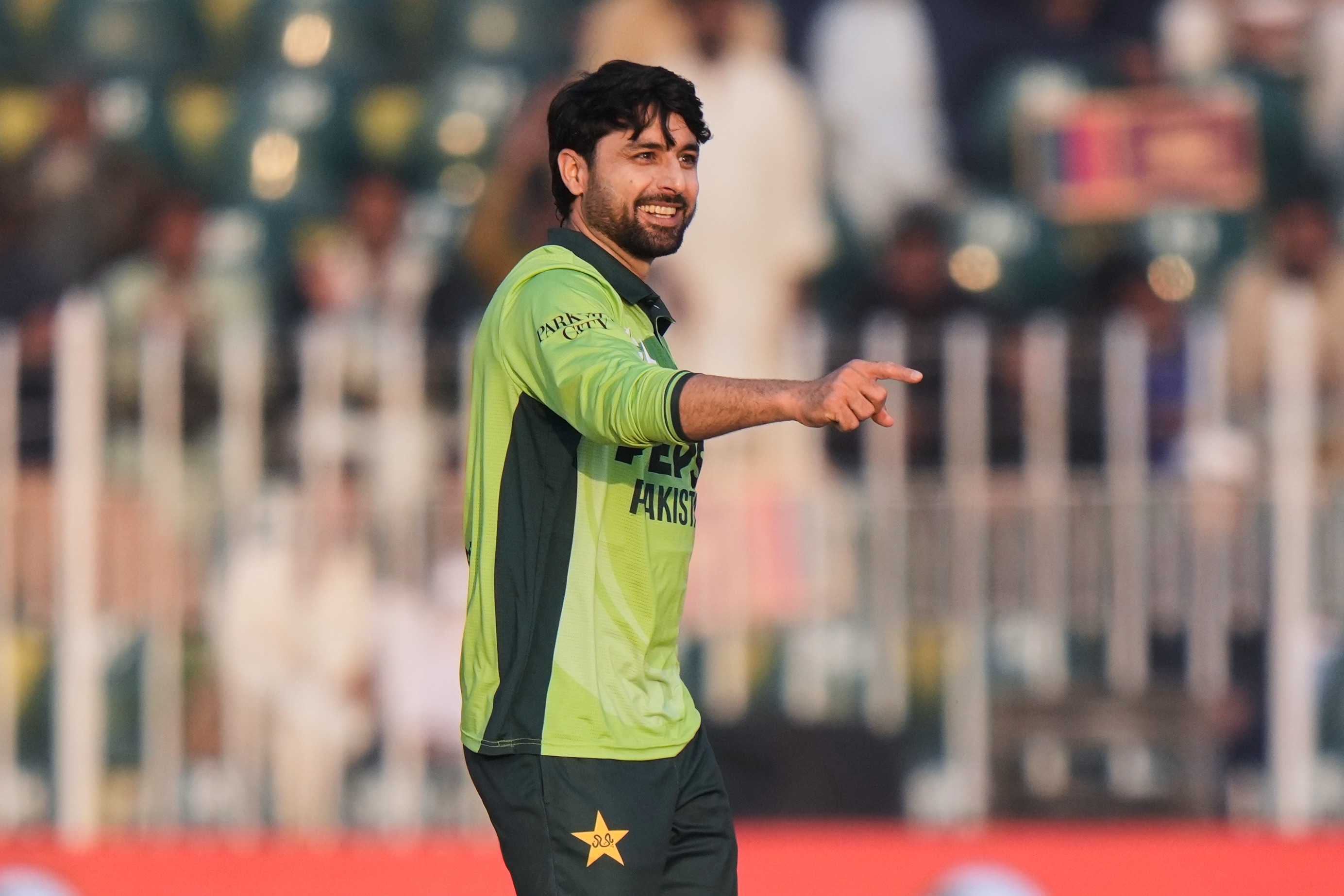
If Abrar Ahmed turns the middle overs into a wicket hunt, Pakistan’s whole blueprint sharpens. He is the kind of bowler who can create collapses on surfaces that otherwise look like 170-par grounds.
Best Possible XI for Pakistan in T20 World Cup 2026
- Saim Ayub
- Shahibzada Farhan (wk)
- Babar Azam
- Fakhar Zaman
- Salman Ali Agha (c)
- Shadab Khan
- Mohammad Nawaz
- Faheem Ashraf
- Shaheen Shah Afridi
- Naseem Shah
- Abrar Ahmed
If the pitch is drier and holding up, Usman Tariq is the straight swap-in as a second specialist spinner, with Pakistan choosing between an extra seamer and extra batter based on the conditions.