


Indian sports face a crisis: An unscrupulous administration
 January 26, 2026
The Systemic Challenges Facing Indian Sports
The irony of sport in our country is that officials don’t assist, they hinder. This sentiment has been echoed by athletes and sports enthusiasts for years, but it continues to resonate with painful accuracy. A recent incident involving India’s leading pole vaulter and national record holder, Dev Meena, highlights the ongoing struggles faced by athletes in navigating a system that often prioritizes bureaucracy over talent.
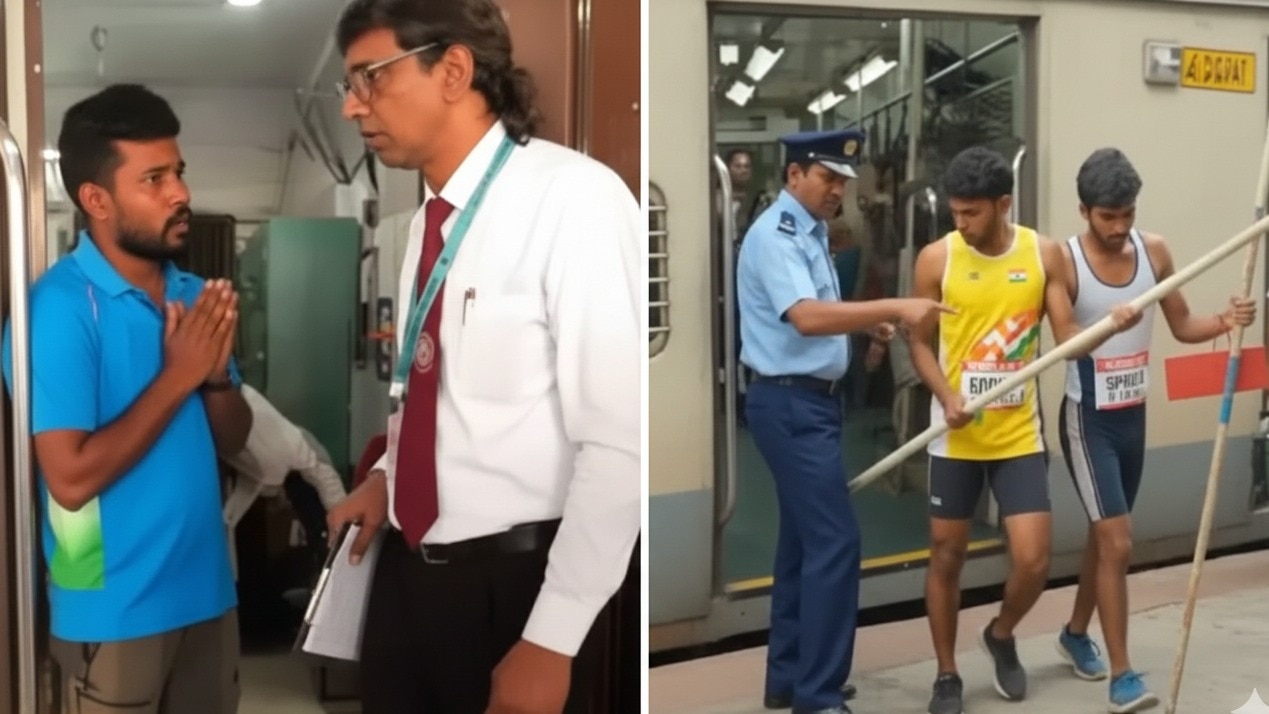
Meena and his teammates, including inter-university champion Kuldeep Yadav, were forced to deboard a train after railway officials refused to allow them to carry their sports equipment. They were asked to pay a “penalty amount” for transporting their pole vaults inside the coach, which were allegedly dismissed as “steel pipes.” In that moment, years of training, sacrifice, and national ambition were reduced to a procedural nuisance. A viral photo of the coaches of the pole vaulters, begging the Train Ticket Examiner to allow them to continue their travel, went viral on social media.
What makes the episode more unsettling is not just its cruelty, but its familiarity. Because those opening lines were not written today. They were written nearly two decades ago by India’s first individual Olympic gold medallist. In his autobiography A Shot at History: My Obsessive Journey to Olympic Gold, Abhinav Bindra devotes an entire chapter to Indian sports officials. Titled “MR INDIAN OFFICIAL THANKS FOR NOTHING,” it recounts an episode from 2006. Nearly 20 years later, the grievance feels unchanged, as if time has moved, but the system has not.
Medals Can’t Be Won by Talent Alone
The Dev Meena episode was not an aberration. Just weeks earlier, at least 18 school students who represented Odisha at the 69th National School Games Wrestling Championship in Ballia, Uttar Pradesh, were forced to travel sitting on the floor near a train toilet with their luggage. Their tickets had not been confirmed by the authorities. The episode triggered allegations of mismanagement and once again exposed the everyday humiliations young athletes are expected to quietly accept.
But perhaps no incident better revealed the casual imbalance of power between administrators and athletes than what unfolded in Delhi in 2022. At the Thyagaraj Stadium complex, a crucial training venue for the capital’s athletes, sports activities were reportedly being cut short so that Sanjeev Khirwar, then Delhi’s Principal Secretary (Revenue), could walk his dog. Athletes alleged that the track was being cleared and the complex shut by around 7 pm, well before standard training hours ended, to accommodate the personal routine of Khirwar and his wife, Rinku Dugga, also an IAS officer.
What began as quiet resentment within sporting circles quickly snowballed into a national controversy in May 2022. The allegation that athletes were being asked to vacate a public sports facility for a dog walk struck a raw nerve. Khirwar denied the claims, calling them “absolutely incorrect.” While he accepted that he “sometimes” walked his pet at the venue, he insisted athletes’ training was not disrupted. The optics, however, told a harsher story. The fallout was swift. Khirwar was transferred out of Delhi to Ladakh, and the city’s then Chief Minister Arvind Kejriwal ordered that all state-run sports facilities remain open for athletes until 10 pm.
The Fragility of Access to Public Infrastructure
The episode was revealing not because of how it ended, but because of how easily it began. It showed how fragile athletes’ access to public infrastructure can be, and how often dignity in Indian sport depends not on policy, but on public outrage.
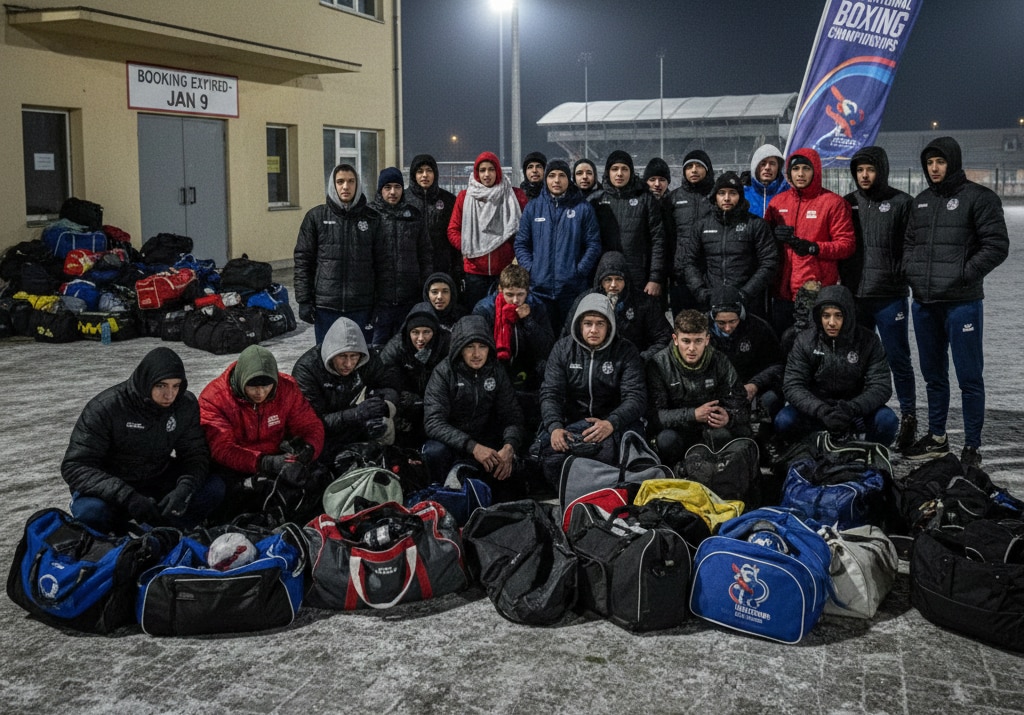
Nor did the list end there. On January 10, 2026, boxers, coaches, and support staff from multiple teams were left stranded late at night on the penultimate day of the Elite National Boxing Championships, after being asked to vacate their accommodation. Several teams said their bags were dumped outside their rooms and they were told to leave hostels and lodges because bookings had only been made until Friday, forcing athletes to spend hours in the cold.
This is the lived reality of Indian sport at a time when the country has begun to dream big. Prime Minister Narendra Modi has spoken openly about India’s ambition to host the 2036 Olympic Games in Ahmedabad. But ambition alone does not build credibility. The daily experiences of Indian athletes reveal a system marked by neglect, confusion, and administrative indifference. Until governance improves at the grassroots and federation level, the Olympic dream will remain aspirational theatre.
The Need for Reform
Take the Wrestling Federation of India. Suspended by the Sports Ministry in 2023 for flouting governance norms, the WFI was reinstated only in March 2025 after prolonged legal and administrative wrangling. The price of this paralysis was paid not by officials, but by wrestlers, who missed two Ranking Series tournaments critical for international exposure.
Indian wrestlers were also shut out of multiple global competitions across 2023 and 2024 as the federation’s ad hoc committee failed to get its act together. The failure was particularly galling given wrestling’s place in India’s Olympic history. It remains the country’s most successful Olympic sport, with Indian men winning seven Olympic and 14 World Championship medals, while women wrestlers have claimed one Olympic and 10 World medals.
These are not isolated lapses or individual missteps. They are symptoms of a deeper administrative sickness that cuts across sports.
Governance and the Future of Indian Sports
In February 2024, legendary shuttler Pullela Gopichand called for urgent reform. “One legislation I would really love to see is the government telling us that we are not under bureaucrats, sports administration is not under politicians. Sports must be managed by professionals and people who understand sport,” Gopichand said at the News9 Global Summit.
Fittingly, Abhinav Bindra was appointed to lead a Sports Ministry Task Force in August 2025 to examine the systemic failures in India’s sports administration. The Bindra-led panel submitted its 170-page report in December 2025, exposing deep structural flaws. Chief among them were untrained individuals in key governance roles and the absence of professional expertise at the top.
The report flagged poor accountability, staff shortages, and weak athlete pathways, alongside the dominance of officials, many of them politicians, ill-equipped to run modern sports federations. The lack of structured training, standard operating procedures, and basic empathy towards athletes was stark. Decision-making, the task force noted, is often reactive, sometimes arbitrary, and rarely strategic.
Respect the Athletes
For Indian athletes, dignity should never be negotiable. Yet time and again, they are asked to surrender it at railway platforms, training venues, hostels, federation offices, and selection trials, places where aspiration collides with indifference.
India’s ambition to host the 2036 Olympic Games cannot be built on infrastructure alone. Stadiums, athletes’ villages, and glossy presentations mean little if sportspersons continue to be treated as inconveniences within their own system. The Olympic movement rests on respect, fairness, and human dignity. These values cannot be rehearsed for a bid and ignored at home.
Abhinav Bindra’s words were meant as a warning. That they still resonate today is not coincidence, but condemnation. If India continues to look away, the cost will not merely be missed medals or a failed Olympic bid, but something far more corrosive: the slow, irreversible breakdown of trust between a nation and those who wear its colours on the world stage.