


Crosby’s Late Goal Not Enough as Columbus Wins in Shootout
 January 18, 2026
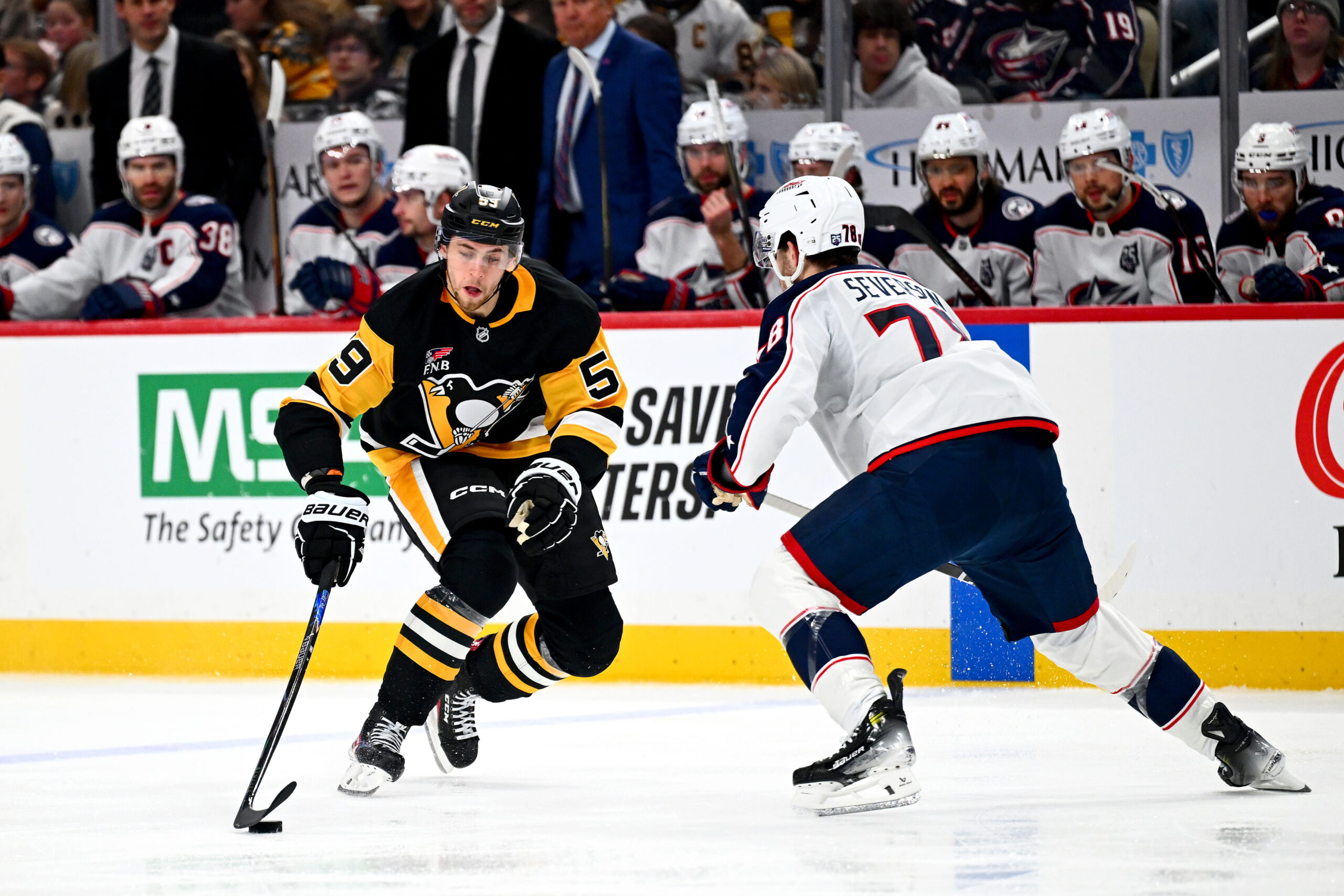
Pregame
The Penguins are relying on their current roster, with Arturs Silovs getting a chance in the goalie rotation. This decision is part of a broader strategy that involves managing the team’s performance amid a busy schedule.
First Period
Columbus started the game strongly, scoring first when Zach Werenski’s shot hit Noel Acciari and landed at the feet of Zach Aston-Reese. Aston-Reese was quicker than Silovs, and his quick shot found the net. The Blue Jackets led 1-0 at 2:42 into the game.
The Penguins responded quickly, with Connor Clifton scoring his first goal of the season. Clifton showed great determination by staying active in the offensive zone and finishing the play to tie the game.
A Columbus turnover in their own end proved costly. Sidney Crosby recovered the puck and passed it to Rickard Rakell, who took a shot that gave the Penguins a 2-1 lead.
Pittsburgh showed good resilience, as Columbus only managed two shots in the last 17+ minutes of the period. The Penguins were able to maintain their momentum despite the early setback.
Second Period
Columbus made a strong response early in the second period. The Penguins had a power play but failed to capitalize, allowing Columbus to build momentum. Kirill Marchenko scored on a surprising shot from the neutral zone, tying the game at 2-2.
The Penguins struggled to create consistent chances, and most of their opportunities were isolated. At the end of the period, Danton Heinen redirected an Erik Gudbranson point shot, giving Columbus a 3-2 lead.
The second period was challenging for the Penguins, as they couldn’t match Columbus’ intensity. The Blue Jackets outshot Pittsburgh 13-8 in the period, with most of the Penguins’ chances being one-off attempts.
Third Period
The Penguins started the third period well, killing a penalty from the second period. Clifton and Crosby created some chances, but they narrowly missed the net.
Columbus continued to generate pressure, and Silovs made a crucial stop on Adam Fantilli during a breakaway. He also stopped a 2-on-1 rush, showing his reliability.
The Penguins had a late power play opportunity with 7:49 remaining, but they didn’t make the most of it. It wasn’t until about the 1:35 mark that Silovs was pulled for an extra attacker. The Penguins quickly capitalized on the advantage, with Kris Letang shooting for a deflection and Crosby redirecting the puck into the net. The game was tied at 3-3 with 1:01 left.
Overtime
The overtime period saw both teams struggling to find the back of the net. Crosby-Malkin-Letang started the action, but Ben Kindel’s shot was stopped by Merzlikins. Merzlikins made two more saves on Evgeni Malkin, while Silovs stopped Charlie Coye from close range.
Crosby and Novak had good looks at the net, but neither could score. The game ended without a goal, leading to a shootout.
Shootout
The Penguins went first, with Rickard Rakell taking the shot. Merzlikins stayed with the dekes and pokechecked the puck away. Kent Johnson then scored for Columbus, putting them ahead.
Crosby took the next shot, but he only hit the glove. Egor Chinakhov had a chance to keep the game going, but his shot hit the net. Marchenko had a chance to win it, but Silovs made a crucial save.
Bryan Rust and Coyle took the final shots, with Coyle scoring to give Columbus the win.
Some Thoughts
One interesting aspect of the game was Evgeni Malkin playing on the wing, which allowed his shifts to overlap with Crosby’s. This dynamic is different from when both players were centers.
Dan Muse has remained loyal to the goalie rotation, which is understandable given the team’s overall success. However, questions remain about how long Silovs will stay in the rotation, especially with other goalies performing better.
Muse also faced criticism for the shootout order, particularly for choosing veterans like Crosby over players like Chinakov. This decision affected the outcome of the game, as Chinakov had limited opportunities.
The game was tough for the Penguins, especially against a Columbus team that had recently undergone a coaching change. The new coach brought energy and a fresh perspective, making the opponent more difficult to handle.
Connor Clifton’s goal was a positive sign, as he played confidently throughout the game. His performance highlighted the opportunities available due to Karlsson’s absence.
The Penguins’ power play struggled, going 0/3 on the night. This lack of efficiency was a significant factor in the game’s outcome. The early second-period power play was a turning point, as the Penguins failed to capitalize and Columbus gained momentum.
The game also showcased the increased frequency of 6v5 goals at the end of regulation. This trend seems to be affecting many games, including those involving the Penguins.
Despite the loss, the Penguins deserved something from the game. The fact that no one could score in overtime was frustrating, but taking a point from a tie was ultimately fair.
The next game is just 44 hours away, and the Penguins will have to prepare for a challenging matchup in Seattle.